













Welcome to the France 44 Cheesecutter! Every month, we will aim to explore a new area of cheese and provide our opinions and recommendations. We want to help you decide month by month which cheese is best to melt on your grilled cheese, which soft cheese is best to take with you on a picnic, and which stinky cheese pairs best with that bottle of bubbly in your fridge.
Blue cheese can be an incredibly divisive cheese category. It has its devoted followers, passionately seeking out intense flavors and specific mold strains, and it’s equally passionate haters who want nothing to do with it. As a cheesemonger, it can be tough for me to admit that for most of my life, I was a member of the latter category.
Nowadays, however, I can count myself as a blue cheese lover. It was through the trials and tasting of many different blue cheeses that I found out that my own taste buds prefer a sweeter cheese pairs better with the pepper-y bite of most blue mold strains. So what makes a blue a blue and what options are there if you prefer a sweeter treat (like me) or a more savory take? This post will help guide you through the different blue cheese options at your cheese counter to help you find the ideal cheese for you!
Just like other categories of cheese, there are many different types of blue cheeses to pick from. There are milder and creamy varieties such as Gorgonzola Dolce or Withersbrook Blue that are often used in desserts or on sweeter cheese boards. Some of these cheeses are washed or coated in sweet syrups or liqueurs to infuse the cheese with fruitier flavors. On the other end of the spectrum, there’s more intense and piquant options such as Stilton or Bayley Hazen Blue. These cheeses are often melted on meat or paired with savory accoutrements. Regardless of these flavor differences, all of these cheeses are intentionally inoculated with a strain of blue mold called Penicillium Roqueforti and then punctured to allow air flow. This is a very controlled process that allows the mold to breakdown parts of the cheese and develop branches of delicious (and very safe to eat!) mold. So with all these different factors, what should you consider when looking for blue cheese at the cheese counter?
What to Consider:
- Texture: The blue mold tends to be the center of attention when it comes to blue cheese, but there’s also the rest of the cheese to think about! Are you looking for something soft and spreadable or firmer and more crumbly?
- Tang: How much blue mold funk are you looking for? Maybe you’re just starting to dip your toe into blue cheese and want something on the mild side, or maybe you’re a seasoned blue cheese aficionado after something new and intense.
- Flavor: Just like other types of cheeses, blue cheese can be made with different fat content and milk types. A milk with a higher fat content, like sheep or water buffalo, is going to provide a different base flavor than a cow or goat milk cheese.
- Feeling: Are you looking for something to crumble over your salad or melt on top of your steak? Or maybe this a holiday treat or the centerpiece of your cheese board?
Perfect for Cooking
Great Hill Blue: This cheese is the sole focus of Great Hill dairy located in Marion, Massachusetts, it is made with raw cow’s milk and has a tangy bite with notes of buttermilk. This high-acidity flavor profile makes it ideal for crumbling on top of salad, using it as the base of a blue cheese dressing, or simply eating on a cracker paired with your favorite honey!
Stilton: Stilton is one of the more well known and iconic blue cheese options out there. Made with pasteurized cow’s milk, the paste of this cheese has a more savory quality than some of the other blues in this post that evokes the flavors of a rich broth. Because of this, it’s a popular choice for melting on top of steak or into creamy sauces. This crumbly British favorite is traditionally served at Christmastime and often paired with port.
Most Intense: Roquefort
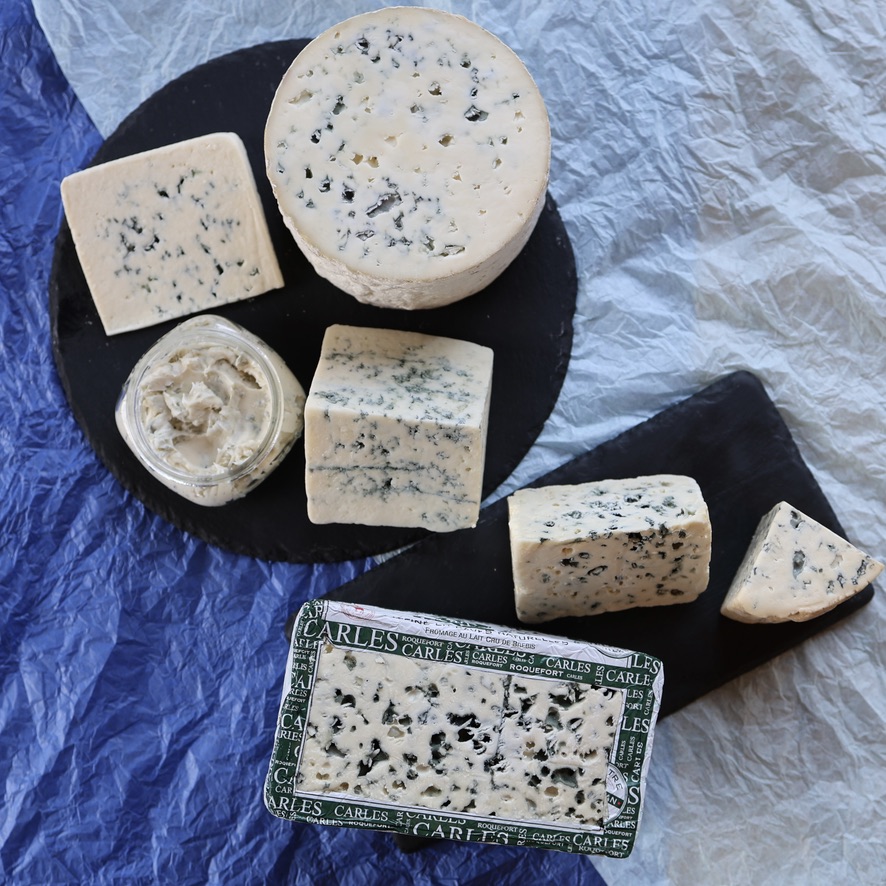
Roquefort is a butter-y soft sheep’s milk from the south of France that is known for its acidic bite and higher fat content. This is one of the most funky options you can go with. The sheep’s milk provides a slightly sweeter note due to its high fat content, but the early addition of Penicillium Roqueforti mold means that this cheese will have lots of blue growth present. Pair this with something sweet such as chocolates or cider and get ready for big bursts of flavor!
Iconic Centerpiece: Rogue River Blue
The star of any autumnal cheese board, Rogue River Blue is an incredibly limited edition, award-winning cheese out of Central Point, Oregon. This cheese is made specifically with the fattier milk that cow’s produce in the fall then hand wrapped with Syrah grape leaves that have been soaked in pear liqueur. The resulting treat is a decadent and sweet show-stopper. Known for being the only American made cheese to ever be named World Champion at the World Cheese Awards, this is a truly special treat that everyone should try at least once. Pair with a fresh pear cider as a nod to pear liqueur or go in a different direction and pair with a chocolate stout for a decadent dessert.