












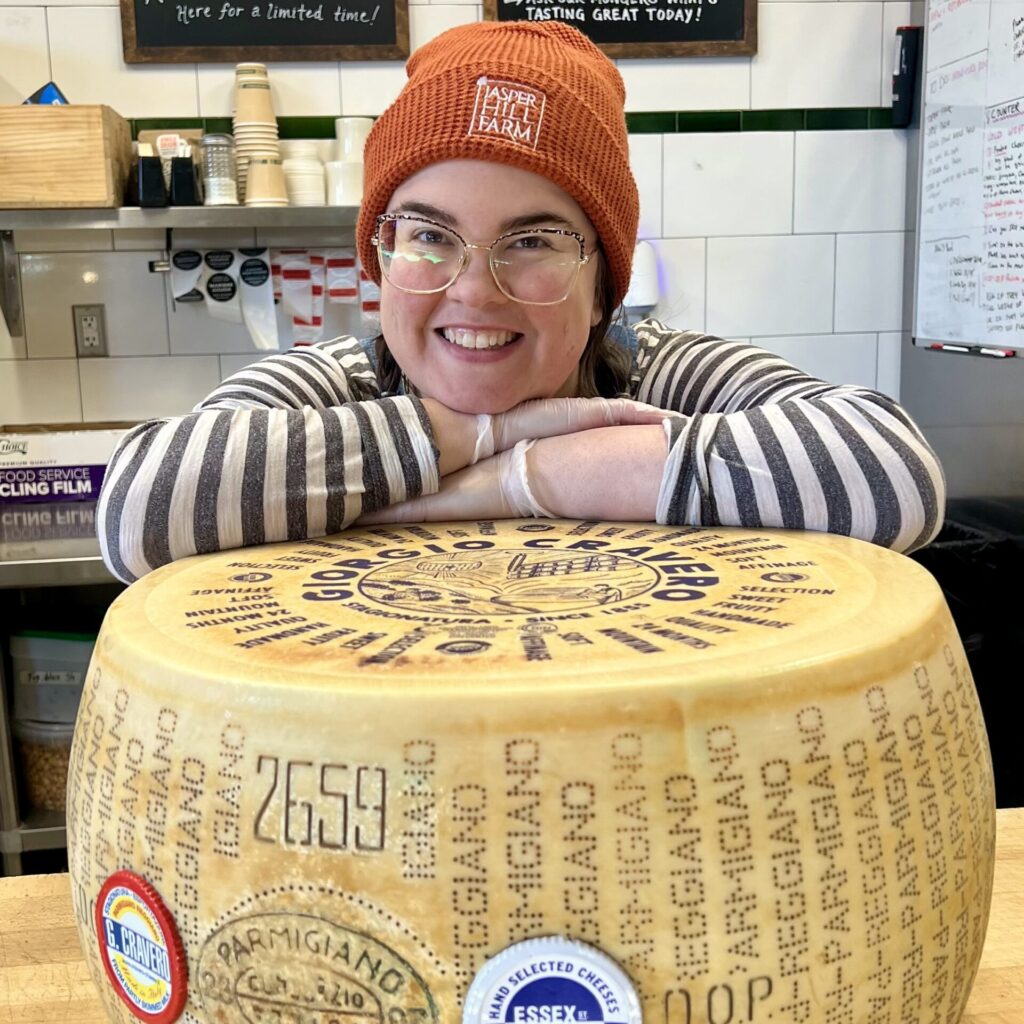
Welcome to Ask Michelle, where I, a Certified Cheese Professional/cheese dork, answer all your most burning cheese related questions. Halloween is upon us, so this time we’ll be talking about some of the spookier parts of cheese. Let’s go!
I love Mimolette cheese, but I just heard there are bugs on it. Gross! What gives?
Cheese mites are, in fact, real. They are teensy arachnids who love munching on fungi. Cheese people have a love-hate relationship with cheese mites, as they are important for rind development for some cheeses, like Mimolette, but they can get out of control and damage your cheese if left unmanaged.
These mites typically live in soil, where they eat fungus and live happily. But cheese aging facilities are like a luxury hotel with all the amenities for these guys, as natural rinded and clothbound cheeses grow all sorts of fun molds as they age. Mites eat the mold on the rind and, if left unabated, can eventually eat into the paste (the cheese inside the rind). This can lead to significant loss of product and generally unpleasant flavors around where they’ve eaten. While the mites themselves are too small to see with the naked eye, they leave significant evidence. A cheese will gather a kind of brown-grey dust on and around it when mites are present, and eventually pits in the rind. A very aged Mimolette has significant mite-related pitting, which is true to the style. A feature, not a bug, if you will. Extensive mite activity can affect the flavor of a cheese, but most affineurs (cheese maturers) will take care of the problem well before that becomes an issue.
Once mites set up in your facility, it’s pretty hard to get rid of them entirely, but you can relatively easily manage them so they don’t wreak too much havoc. Brushing regularly and flipping boards physically removes them, and some cheesemakers even use vacuums.
In short, cheese mites are real, they have an important job in some cheese caves, are a nuisance pest in others, but don’t pose any real risk to most people. They do, however, make Mimolette an even spookier, more perfect cheese for a Halloween celebration!
I recently bought a goat cheese that was grey on the outside, but it wasn’t blue cheese. What was that all about?
Ah yes, the most goth of all the cheeses! The grey stuff on the outside of your cheese was vegetable ash, a very traditional addition to many kinds of cheese, but primarily associated with goat cheeses. The contrast of the bright white paste and the dark ash rind is gorgeous, and so spooky for October! (For more info on why goat cheese is stark white, check out Ask Michelle #2!) However, the ash does more than just look pretty.
Let’s back up 1000 years or so: ash has been used in cheesemaking for a long time, and was traditionally made by burning grape vines and other plant matter in the hearth. Back in those days, a layer of ash on your freshly made cheese would keep flies and other insects off of it. More and more layers of cheese and ash were added until you had enough cheese for your family to eat.
While these original cheesemakers didn’t know it, the ash was also doing other helpful things, like mitigating pH. Goat’s milk has a relatively low pH (high acid), which probably isn’t surprising to anyone who’s tried a tangy goat cheese before. The high acid environment isn’t very friendly to the kinds of molds that become cheese rinds and, especially for higher moisture cheeses, we have a limited window for rind development before the cheese passes its prime. Sprinkling the outside with some ash raises the pH to closer to neutral, allowing the rind mold to flourish and discourage growth of other, less desirable things.
These days we use food-grade vegetable ash in cheesemaking rather than grabbing a handful of ashes from the fireplace, but the outcome is the same: beautiful cheese with a beautiful, goth rind. Proving once and for all that it’s not a phase, Mom!
That’s it for today! Have a cheesy Halloween, and submit your questions to be answered in future editions of Ask Michelle. Until next time, cheese nerds!
Ask Michelle
Introducing: Ask Michelle! Each month, our Cheesemonger, Michelle, will answer YOUR cheese-related queries! Can you eat the rind? How should you store cheese in the fridge? What kind of mold is okay to eat? Submit your questions here and find answers in our monthly column!