













Welcome to the France 44 Cheesecutter! Every month, we will aim to explore a new area of cheese and provide our opinions and recommendations. We want to help you decide month by month which cheese is best to melt on your grilled cheese, which soft cheese is best to take with you on a picnic, and which stinky cheese pairs best with that bottle of bubbly in your fridge.

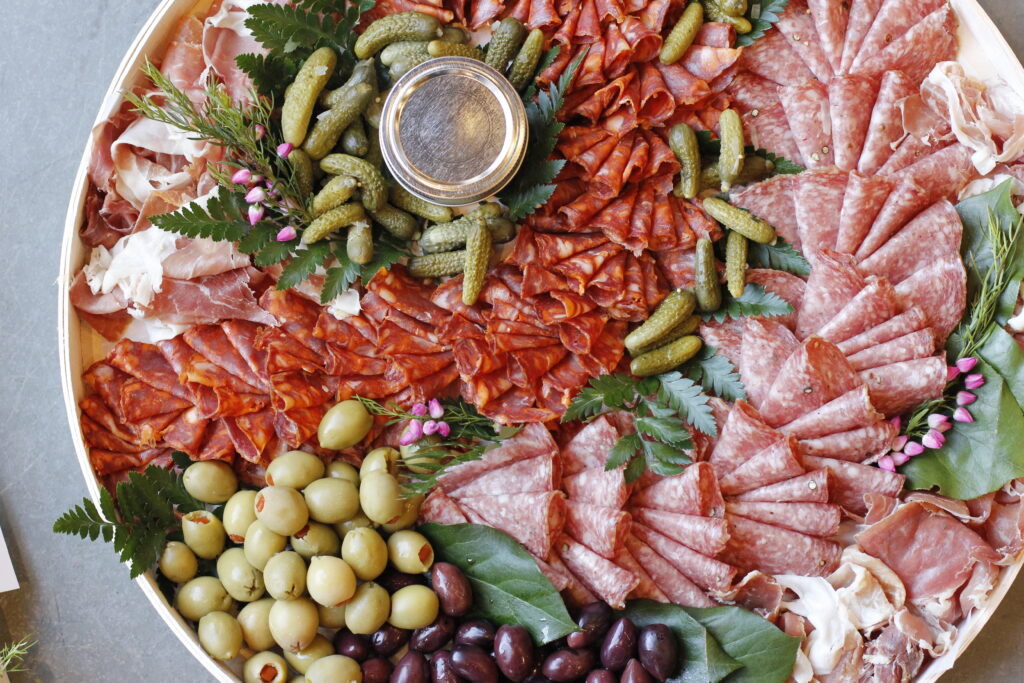
Happy “Charc” Week!! This month, the Cheesecutter steps outside of its typical box and explores the wonderful world of charcuterie!
Charcuterie, technically speaking, refers to the practice of preparing and preserving meats by several different processes including: curing, fermenting, smoking, and/or drying. This means that a traditional charcuterie board actually has no cheese on it at all and focuses entirely on the aesthetic presentation of meats.
The first, and one of the most popular, way of preserving meats is to introduce a curing agent to a portion of raw meat. This curing agent will prevent the growth of harmful bacteria and allow the meat to age and dry for longer. Popular curing agents include salts and nitrates. Nitrates have recently gotten a pretty bad rap for their association with nitric oxide, but it’s important to note that nitrates are a naturally occurring and essential compound. They can be found in leafy greens, human saliva, and, yes, in cured meats. So while it’s appropriate to be mindful of your intake of nitrates, curing and eating meats is a tradition that humans have been taking part in for millennia and one that we don’t need to be afraid of.
The goal of curing is to prevent bacteria growth, but the preservation process of fermentation actually utilizes safe bacteria to purposely lower the pH of the meat. This targets and inhibits the growth of a different set of bacteria than the curing process does. Fermentation can also create a delightful tangy taste in the meat.
Drying and smoking are also common preservation processes and can be used to affect the taste and texture of the meat. Bacteria thrive in a high moisture environment so drying the meat is helpful in that regard. Smoking can also be used both for preservation and for texture and taste. Speck, for example, has a fairly similar aging process to prosciutto except for the inclusion of smoking.
What to Consider:
- Texture: Charcuterie texture can range from a smooth pate to a dried salami to a full muscle cut like prosciutto.
- Feeling: Are you looking for a nostalgic and familiar taste or are you interested in a texture of flavor profile that’s entirely new?
- Flavor: Are you interested in a smoked charcuterie or one with added seasonings? Do you prefer to let the meat itself shine in the flavor profile?
- Meat: Charcuterie is most commonly made from pork, but there’s also mixed meat charcuterie that can utilize beef or venison, as well as 100% beef cured meats.
Cabin Classic: Summer Sausage
Starting off with a familiar favorite, summer sausage is a classic midwest semi-dry sausage often made with a blend of beef, pork, and sometimes even venison with a mix of different herbs, spices, and salts. Before it’s ready to be enjoyed, this sausage goes through all four different preservation steps described above: curing, fermenting, smoking, and drying. The result of this process is an incredibly flavorful and slightly tangy sausage with a lower moisture content than a paté, but a higher one than a salami. We make our own summer sausage here at France 44!
Bring this with you on your next cabin trip (if it’s not already in your picnic basket) and pair with a nutty cheese such as Challerhocker and a snappy pilsner.
Local Love: Lowry Hill Sumac Salami
Based out of Northeast Minneapolis, Lowry Hill Salami hand makes their salami using extremely high quality pork and local flavors. The salami itself is made entirely with ground pork and covered with beef casing and a natural, edible mold bloom. Their sumac salami combines earthy and umami flavors from mushroom powder with the bright acidity of Minnesotan sumac. Enjoy by peeling off the casing and eating with roasted carrots and a crisp white wine.
Euro Summer: Speck
Speck is a full muscle cured meat meaning that the full leg of ham is cured rather than ground and aged in a casing like a salami or summer sausage. If you are a prosciutto lover then Speck is definitely for you. Made by rubbing a pork leg with various spices including juniper berries and bay leaves then lightly smoking the meat before curing, this Italian speciality pairs well with slightly fruity and tangy accompaniments. Pair with Cravero Parmigiano Reggiano and a glass of Prosecco.
Out of the Box: Bresaola
Like speck and prosciutto, bresaola is a full muscle cured meat. Unlike the rest of the charcuterie that we’ve covered this far, bresaola is made from beef rather than pork. Often considered “beef prosciutto”, bresaola is traditionally made with beef eye round and often marinated in Italian aromatics resulting in an incredibly flavorful and unique treat. Bresaola plays well with young goat cheeses such as Blakesville’s Linedeline and medium bodied red wines.