














Every March, we take the opportunity to spotlight women in cheese from our cheese counter. These women may be cheesemakers or business owners – usually both. Women’s History Month offers us a great moment to share the stories of these women, their farms, and their cheese. We love taking an intentional moment to introduce you to these women, but we have more than a months worth of stories to tell. Women in cheese goes far beyond March. Cheese history is inherently women’s history. Cheese has always been by and for the milkmaids.
Pre-Industrial Revolution, gendered division of household labor meant women took responsibility for cheesemaking. Dairy work was considered ‘indoor’ work. Often cheesemaking rooms were physically connected to the house. Cheesemaking fell under the same domain as homekeeping, cooking, cleaning, and raising children. While men would work the farm and care for the livestock, milking the animals and working with the dairy was gendered labor of which women took ownership.
Women’s work with dairy was an essential source of sustenance. They kept their family fed by preserving milk through cheese and butter making. By managing the flow of highly volatile fresh milk into stable cheese and butter, women avoided spoilage and waste whenever possible. This management made the difference for them and their families surviving harsh winters and poor harvests. Women’s cheesemaking could also sustain the family economically if they sold their products. Most cheesemaking stayed within the family home, but there was the option for women to sell their work and bring money back to the household. Women’s cheesemaking contributed to the economic and agricultural health of their home and entire community by selling value-added dairy.
Relegated to the home sphere, women made the most of their work with dairy. However, like much of women’s work, cheesemaking was treated as ‘unskilled labor.’ Many of the women who made cheese didn’t follow or write down recipes. They didn’t keep track of temperatures or amounts. Rather, they worked from their experience and expertise. To craft their products, they trusted the textures, smells, and visual cues known from years of working with dairy. This lack of exacts was used against them.
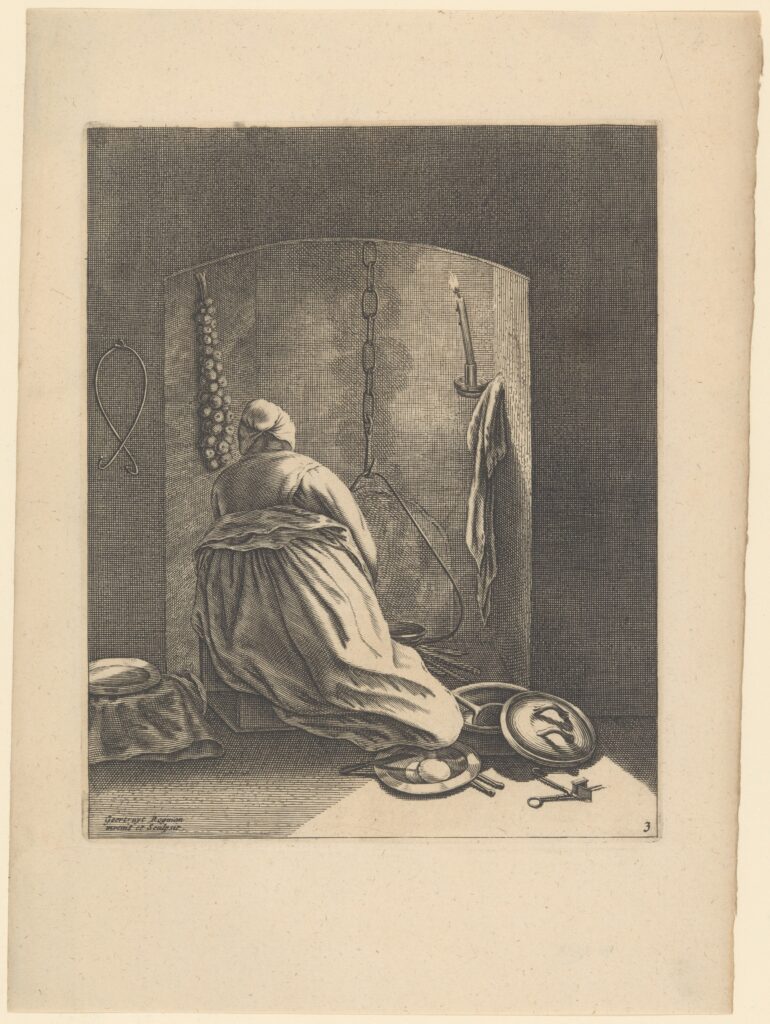
As the Industrial Revolution churned a new era and factories enabled the commodification and mass production of cheese, women were ousted from the center of cheesemaking. Men inquired about women’s recipes, brought them into the factories to teach their techniques, then barred them from working with the dairy. The factory owners used women’s highly skilled labor to start the machine-produced world of cheese, then claimed women weren’t skilled enough to be capable of doing the work.
These factory-made cheeses diminished the diversity of artisan cheeses and squashed the economic opportunities of the home cheesemaker. Once, every farm had its own cheese variation, its own unique interpretation of the land. With factories pooling milk from multiple farmers, all that dairy was becoming one product. Milk also became pasteurized. Pasteurization allowed more stability on a grand production scale but killed the complex biosphere that makes each cheese unique. The large-scale cheese production made cheese cheaper, and women struggled to compete in the market with their homemade cheese and butter. Specialty cheeses were made less. Economic opportunities opened for women in other ways, drawing them to factory work and away from tending to the home dairy.
For many decades, artisan cheese declined. A few catastrophic wars later and artisan cheesemaking almost went extinct. Then, in the 70’s and 80’s the ‘Back to the Land’ movement inspired a new generation to return to self-sustaining practices. Women became dominate leaders of this movement, of which homesteading and farmwork were crucial cornerstones. The movement rebirthed artisan dairy and cheesemaking. A prime example of women leaders in the movement are the Goat Ladies: a group of women across the United States who committed their lives to goat dairy. These women, including Judy Schad (Capriole), Laura Chenel (Laura Chenel’s Chevre) Allison Hooper (Vermont Creamery), pioneered the artisan goat cheese movement in the United States. Without them, chevre wouldn’t have gained such a foothold on US consumers. The interest and demand for artisan goat cheese helped kickstart interest and demand for all artisan cheeses and rebirth of domestically made artisan cheese across the United States.

The history of women being ousted from cheese echoes the realities of small artisan cheese shops. Often women-owned and often women-run (and almost always women-worked), small artisan cheese shops are constantly in battle with other large food outlets. Larger groceries can sell mass-produced, often anonymous cheese at a much more appealing price than a small shop can sell a wedge of unique Appleby’s Cheshire or a wheel of dynamic Julianna. However, if we continue to champion the real stories and history behind each of these artisan cheeses, we’ll all continue to agree the cheeses are worth it. Cheese is expensive, yes, but more importantly, it’s valuable. Every cheese is a condensed expression of land, history, labor, nutrition, culture, and more. We think the unique heritage and expression of each cheese is worth fighting for.
Every month is Women’s History Month, especially in cheese. Making cheese is hard enough; making cheese that’s delicious is short of miraculous. All the praise and awe to the women we spotlighted this month and all the women we root for in dairy. We know there isn’t any dairy without women’s work.
Much of the information written above is sourced from another incredible woman in dairy, Mary Cassella. Awarded the Daphne Zepos Research Award in 2021, she focused her research on women in dairy. Her virtual presentation is linked below. Mary Casella’s extensive bibliography is also linked below.
Virtual Presentation: Women’s Work: The History and Legacy of Women in Dairy