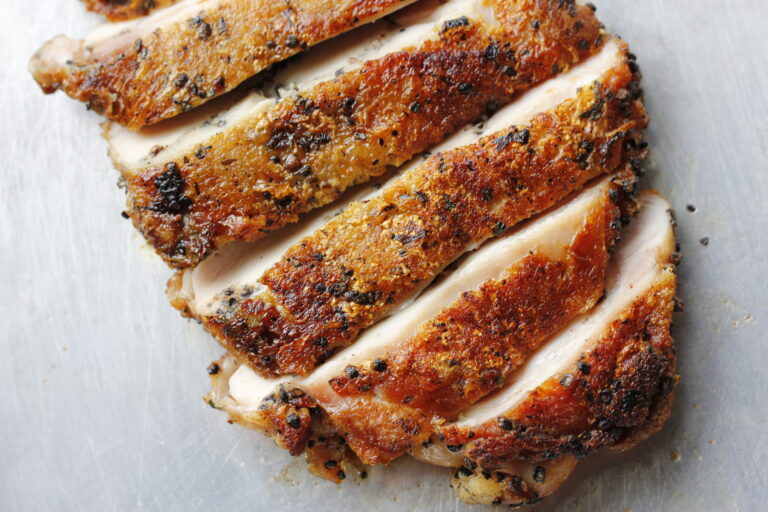













When local farmer Tom Hunter approached us about the veal he was raising a few years back, we’d never even considered selling veal. It didn’t fit our model or standards for ethically raised meat. But Tom painted a much different picture: a more traditional method that gave the calves access to their mothers’ milk and to pasture. This is Tom’s Rose Veal. It presents much more like grass fed beef than the traditional ultra white veal you may be used to. It’s complex and beautifully tender.
We are one of the only (maybe the only) butcher shop in Minnesota practicing whole veal butchery, and we’re so lucky for that opportunity. It gives us access to not only the classic cuts, but also a wider variety from the entire animal.
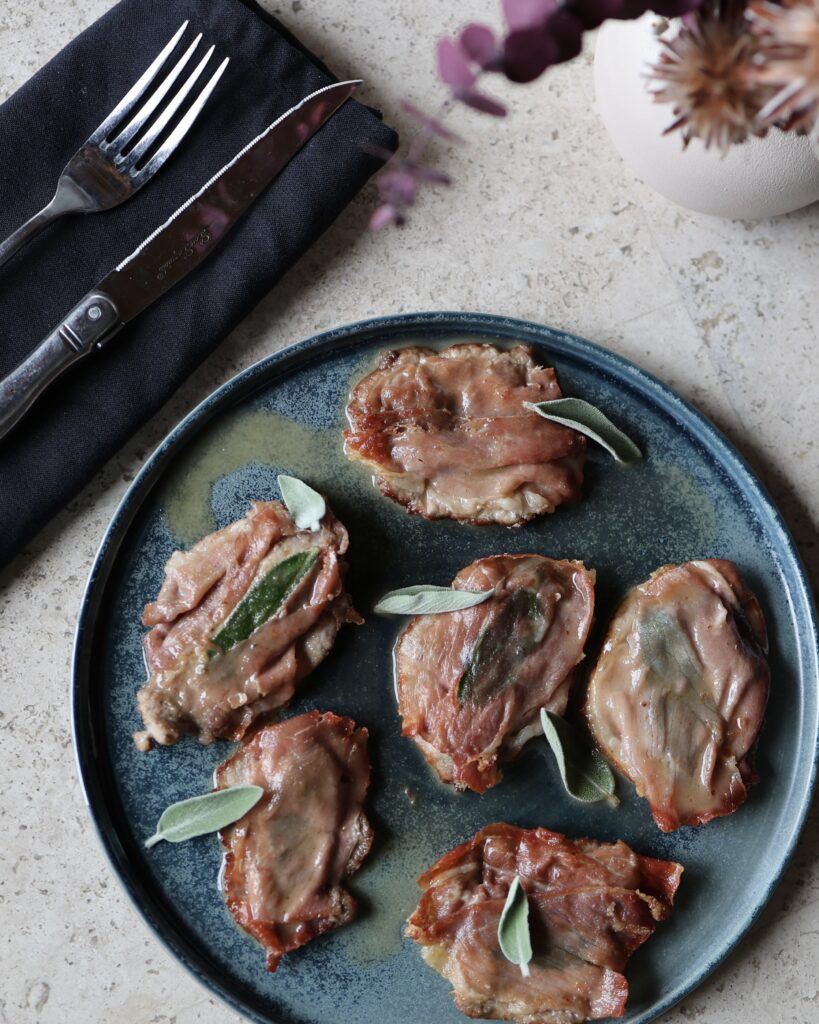
We have this Rose Veal in the case now, and one of our favorite preparations that lets the meat shine is Saltimbocca – a classic Italian dish that consists of veal cutlets wrapped in prosciutto and sage. It’s simple, it’s delicious, and it’s a crowd pleaser. Here’s our recipe:
8 veal cutlets (about 1 pound)
Kosher salt and freshly ground black pepper
1 bunch fresh sage, divided (about 4 ounces)
8 large, thin slices prosciutto (about 1/4 pound)
Cornstarch, for dredging (about 1/2 cup)
3 tablespoons (45 ml) extra-virgin olive oil, divided
2 tablespoons (30 g) unsalted butter
1/3 cup (80 ml) dry white wine
Fresh juice from 1 lemon, to taste
1 teaspoon soy sauce (5 ml)
Arrange cutlets on a work surface, cover with a sheet or two of plastic wrap, and pound each with a meat pounder or the bottom of a small heavy saucepan or skillet until no more than 1/4- inch thick throughout. Season lightly on one side only with salt and pepper.
Flip veal cutlets so that the salted side is down. Pick eight of the largest sage leaves from your bunch and lay one in the center of each cutlet; if the sage leaves are small, use two per cutlet. Lay a slice of prosciutto on top of each cutlet, sandwiching the sage leaves flat between them.
Using two wooden toothpicks per cutlet, fasten the prosciutto to the cutlets (the easiest way to do this is to push the toothpicks down through the prosciutto and just into the veal, then back up through the prosciutto again, much like fastening them together with a safety pin).
Pour about 1/2 cup of cornstarch into a wide, shallow bowl. Dredge the underside of each prosciutto-topped cutlet in the cornstarch, shaking off the excess.
In a large skillet or sauté pan, heat 2 tablespoons olive oil over high heat until shimmering. Add 4 of the cutlets, prosciutto-side up, and cook, swirling the pan occasionally, until the cutlets are lightly browned on the bottom and the last traces of pink are visible on top at the edges. Using a thin metal spatula, flip all of the cutlets prosciutto-side down, then flip them back immediately. Transfer to a clean platter. Lower heat at any time while cooking the cutlets to prevent burning.
Add remaining 1 tablespoon olive oil to the skillet. Add remaining 4 veal cutlets and repeat as in Step 5, then transfer to the platter.
Lower heat to medium-low and add butter and a few sprigs of sage to the skillet and cook until butter is melted. Add white wine. Bring to a simmer over medium heat, stirring and scraping up any browned bits, then continue to cook, stirring and swirling constantly, until sauce is emulsified and slightly thickened (exact time can vary significantly depending on your skillet size and burner power; increase the heat at any time if it seems to be taking too long, or lower the heat if it’s reducing too quickly).
Season with salt and pepper, then stir in 1 teaspoon of lemon juice. Taste and add another teaspoon (or more) of lemon juice, if desired. Stir in soy sauce, if using. If the sauce breaks at any point, whisk in a tablespoon or two of water to bring it back together. Discard sage sprigs. Pour sauce all over veal cutlets and serve right away.