














by Will Newton
I have a secret love for slightly dusty French recipes. They are (obviously) delicious and a good source of cooking techniques to bring into the kitchen when you need something to stick to your ribs in the winter. This recipe adapts the classic poulet a la moutarde without the hassle of braising. It will keep a dinner party well fed or can easily scale down to a quick dinner for one. I elected to tackle just the protein here but can attest to the deliciousness of asparagus or slightly crunchy green beans to round out the meal.
Here's What You'll Need:
- One whole Kadejan chicken (Between 3.5 and 4.5 pounds)
- Kosher salt and black pepper
- 30 grams all-purpose flour
- 30 grams (about 2 tablespoons) unsalted butter
- 1 quart low-sodium chicken stock (about 900 grams)
- Three bunches fresh tarragon
- Fresh or dried thyme
- Whole grain and dijon mustard (about 3 tablespoons each)
- Sherry vinegar
- ¼ cup heavy cream
Prepping the Chicken
Preparation of your chicken can begin right before your meal or a few hours in advance if you like to brine your birds before roasting. To begin:
- Preheat your oven to 450 degrees.
- Turn the chicken such that the top of the breast faces you. With your finger, feel for the wishbone at the opening of the neck and run the tip of your knife along the length of its outside edges. Pull the wishbone out and set aside – it’s fine if it breaks this is for ease of serving once the chicken is out of the oven!
- Flip the chicken over so the spine is facing up and the legs are pointing towards you. With kitchen shears or a thick-spined knife cut along either side of the spine (this can be great for stock later so hold onto it). Score the sternum and flip the chicken breast side up again and press down to flatten it.
- Turn the bird back to its spine side and remove the sternum (again, this is for easy serving. The idea here is to get ¼ chicken portions).
- Pat the bird dry with kitchen towels. Cover the chicken in a neutral cooking oil and season liberally with kosher salt, pepper, and thyme. Don’t be afraid of seasoning here, a whole chicken can take quite a bit of salt and your sauce can be adjusted to match.
- Roast for around 45 minutes or until the thickest part of the breast registers at 165 degrees. Thighs and drumsticks can take more heat, but once the breast is done they should be perfect! Let rest for around 10 to 15 minutes.
The Sauce
Learning to nail this technique for sauces has been incredibly useful for me when cooking a big batch of really any kind of protein. It yields a glossy, hearty sauce and makes meals that little bit more interesting. You can always start the sauce before your chicken and keep it warm on your smallest burner, just be sure to keep an eye on its thickness.
- Begin by warming your stock on medium-low heat in a pot.
- In another pot, melt your butter on low heat and add the flour to build a roux.
- Cook your roux for around 10 minutes or until the raw flour smells subsides and the mixture resembles wet sand. It should be slightly brown and smell nutty.
- Once your stock is beginning to steam, ladle it into the roux, stirring vigorously. Go slowly here, the idea is to fully integrate the stock and avoid clumps of flour.
- Turn the heat up so the sauce begins to simmer and thicken slightly. You are looking for it to coat the back of a spoon.
- Add the mustard to taste. The measurements and kinds of mustard listed above are rough guidelines. I opted for both whole grain and dijon here because the whole grain adds a nice bit of texture to the sauce. Dijon should have some emulsifying agents in it so breaking the sauce or causing clumps is less of a worry, but don’t forget to keep moving the sauce around.
- Continue whisking and add cream (whole milk works well here, too). This should cut some of the heat of the mustard and add richness. Add sherry vinegar, salt, and a big hit of cracked black pepper to taste.
- Introduce roughly chopped tarragon into the sauce just before you serve.
- Always taste your sauce and adjust as you’re going! If it thickens too much feel free to add more stock or dairy and continue dialing it in to your taste.
Serving
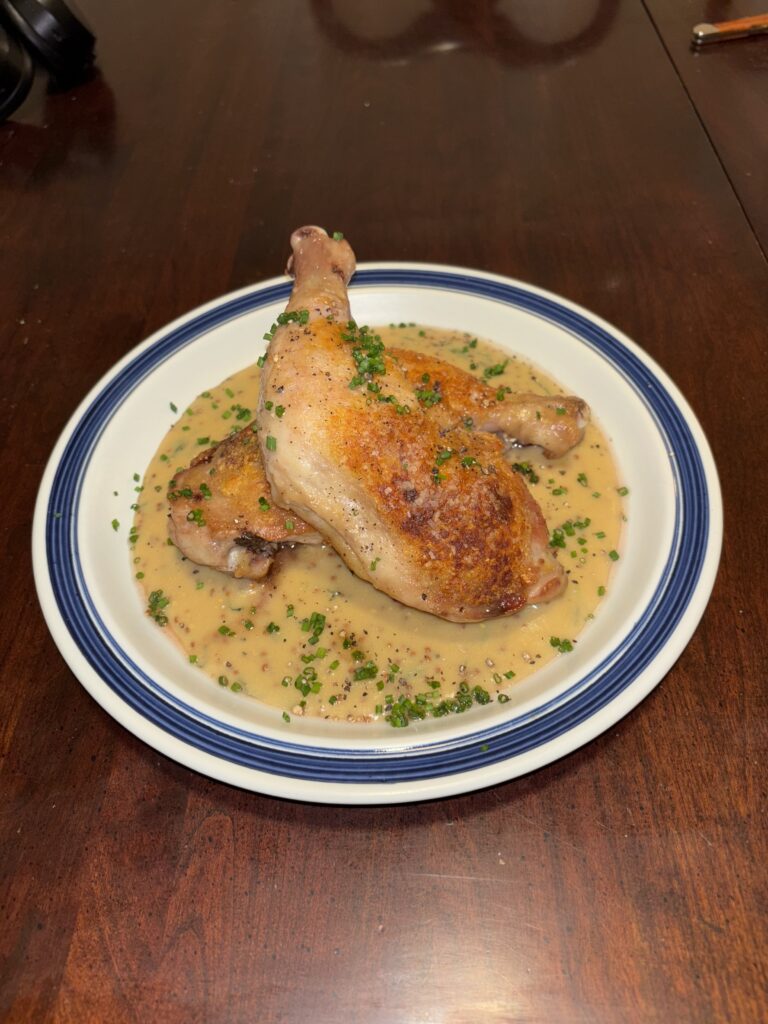
Once your chicken has rested you should be able to cut right down the middle of the breast and separate the legs giving you four large portions. Pour the sauce on the chicken, garnish with freshly chopped chives or parsley and serve!